
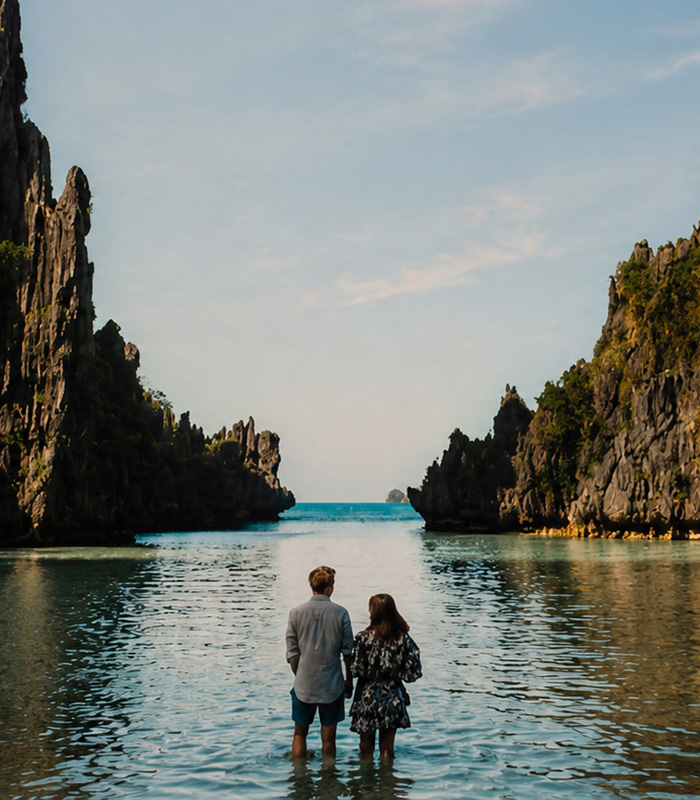
AT THE EDGE OF BACUIT BAY.
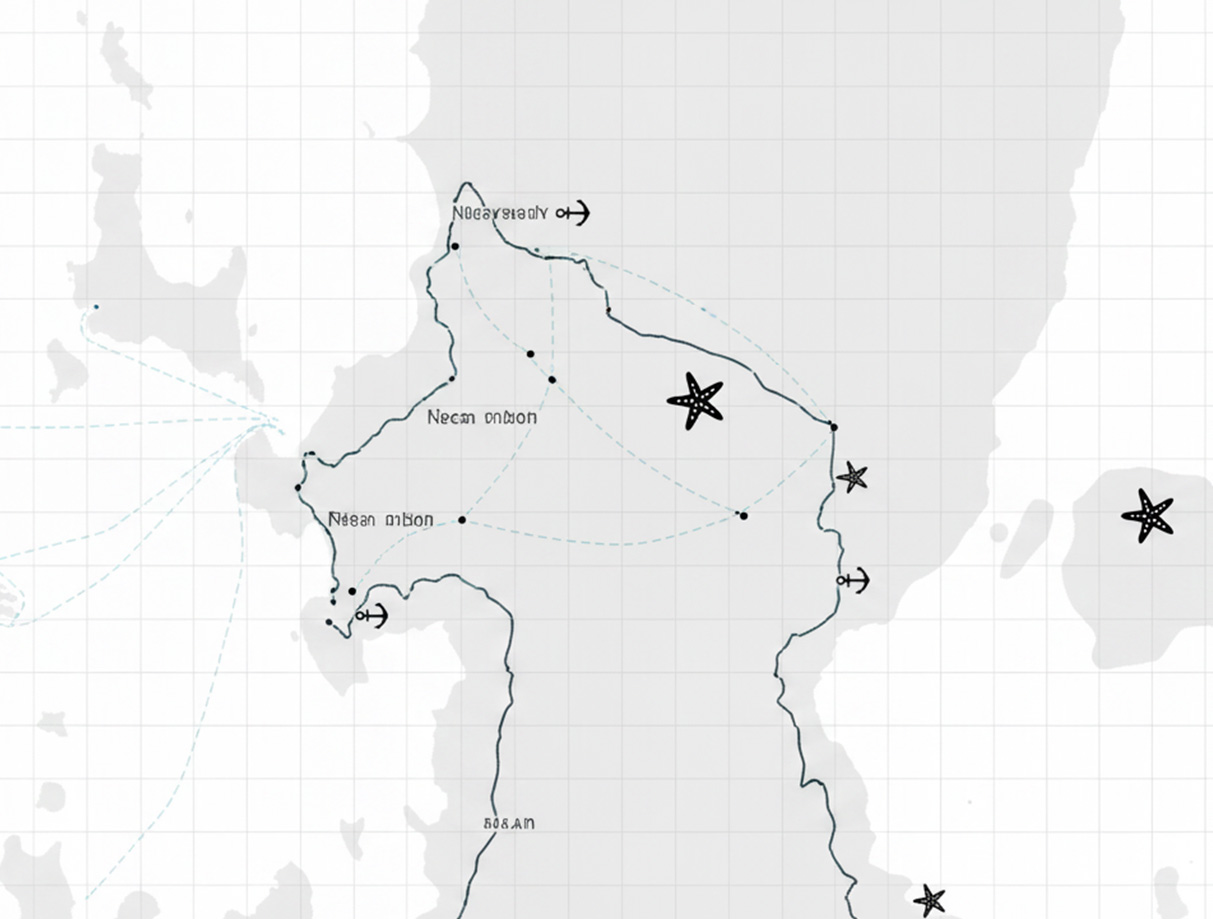
PALAWAN - EL NIDO
The Philippines is an archipelago of over 7,000 islands scattered across the Pacific, each offering its own shade of turquoise water, white sand, and untouched wilderness. Among them, Palawan consistently ranks as one of the most beautiful islands in the world — a long, narrow province stretching between the South China Sea and the Sulu Sea, known for its dramatic limestone cliffs, hidden lagoons, and biodiversity found nowhere else on Earth. Often called the Philippines' "last ecological frontier," Palawan remains largely untouched by mass development, preserving vast stretches of rainforest, coral reefs, and marine sanctuaries that make it a haven for travelers seeking nature in its purest form.
Manila to El Nido is a single flight of an hour and twenty minutes. From the airport, twenty minutes by road to Mayara. Two hours, door to door, from one of Asia's largest cities to a forest where the loudest thing is the birds. Remote is a feeling here, not a logistics problem.
PLAN YOUR JOURNEYTHE WILD BEYOND MAYARA
Limestone islands, hidden lagoons and water that changes colour by the hour.

BEACH

WILD

RAIN

FOOD

PEOPLE
ABOUT EL NIDO
El Nido takes its name from what Spanish traders found in these cliffs: the nests of swiftlets, built high inside the limestone caves and harvested for centuries for bird's nest soup. Nido means nest. The town was known as Bacuit until the middle of the last century, and the bay still carries that name — a stretch of water scattered with dozens of islands and islets, all of them formed from limestone laid down here hundreds of millions of years ago, long before this was land at all. For most of its history it was a remote fishing settlement, reached only by boat and known to almost no one.
That changed slowly, and deliberately: much of the area now sits within a protected zone, and development has been shaped by conservation rules rather than demand. The result is a place that still feels unfinished in the best sense — a small town, a working port, forest that reaches the shoreline, and a bay whose lagoons and beaches you still have to travel to reach. El Nido has become one of the most photographed places in the Philippines without becoming a resort strip. That balance is fragile, and it is precisely what makes it worth protecting.